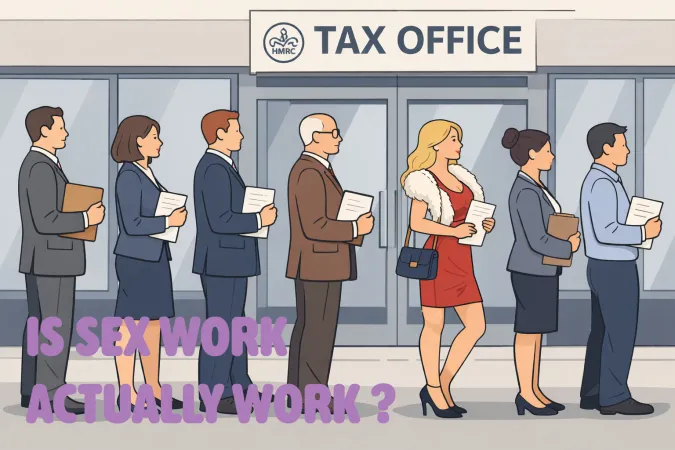
Is Sex Work Actually Work? A UK Perspective on Escorts and Escort Services
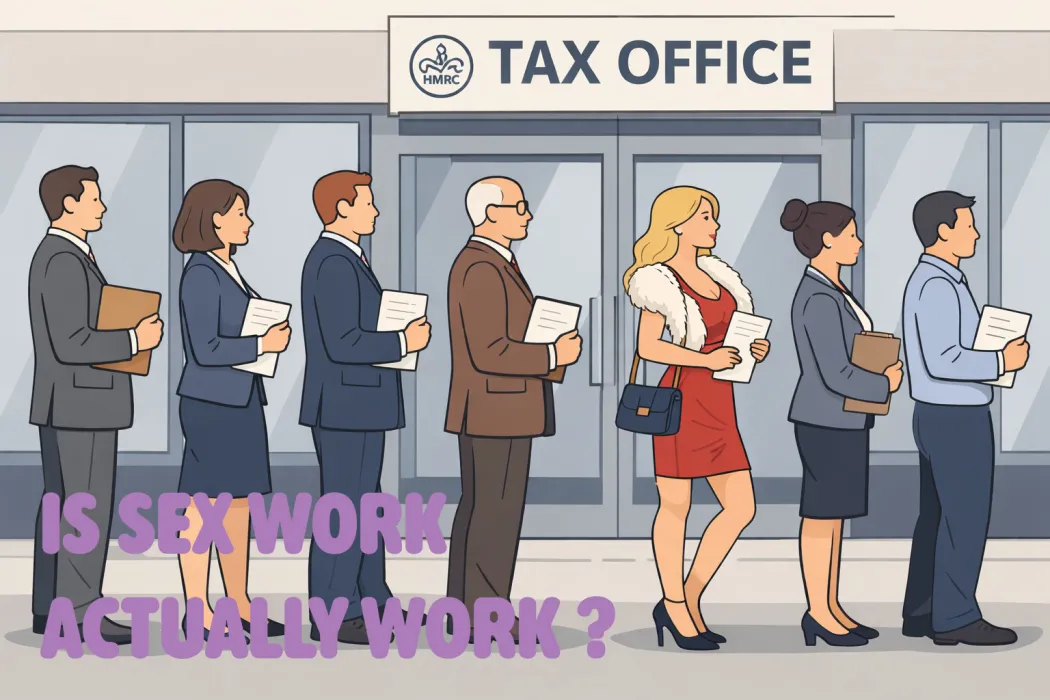
The debate about whether sex work is “real work” has been going on for decades. In the UK and across the world, people still question whether exchanging sexual services for money should count as legitimate labour. Even with changes in law, culture, and the rise of online platforms, the subject remains controversial.
The term “sex work” itself became widely used in the late 1970s when activist Carol Leigh introduced it to shift the conversation away from shame and towards labour rights. Instead of framing prostitution as deviance, she framed it as work. That shift in language changed how many people approached the discussion.
This article looks at whether sex work especially escort services fits the legal and social definition of work in the UK. It is not written to promote anything illegal. The aim is simply to clarify how the issue is viewed under UK law and within society.
Why This Question Comes Up So Often
When people search for information about escorts in the UK, they usually fall into one of three groups. Some are simply trying to understand the legal and ethical side of the industry. Others are browsing escort services. And some are actively looking to book escorts.
This article focuses on the first group those who want clarity. But understanding how the industry works also helps people make informed decisions more generally.
What Counts as Legal Work in the UK?
Before deciding whether escorting qualifies as work, it helps to define what legally counts as work in the first place.
At its simplest, work means providing a service or skill in exchange for payment. If someone sells their time or expertise and receives money for it, that usually meets the economic definition of work.
The International Labour Organization defines work as:
“Activities performed by persons of any sex and age to produce goods or to provide services for use by others or for own use.”
That definition is broad. It does not judge the type of industry involved. It focuses only on whether a service is being provided.
In the UK, HM Revenue and Customs (HMRC) looks at it from a tax perspective. If someone earns income by providing a service, that income is taxable. The nature of the industry does not automatically remove it from being considered economic activity.
Legally speaking, the key questions are straightforward:
-
Is a service being provided?
-
Is payment being received?
-
Is income being generated?
If the answer to those questions is yes, the activity usually falls within the structure of work for tax and regulatory purposes.
How This Relates to Escorts and Escort Services
Escorts provide a service. Independent escorts manage clients, arrange appointments, set rates, and receive payment. From a structural point of view, that looks very similar to other self-employed professions.
Many UK escorts operate independently. Like photographers, personal trainers, or consultants, they:
-
Advertise their services
-
Manage their own bookings
-
Set boundaries
-
Control their working hours
-
Handle their own finances
From an economic perspective, escort services often fit within a self-employment model.
That does not mean every part of the industry is free from legal issues. It simply means that providing companionship services privately in exchange for payment is not automatically illegal in the UK.
The Moral and Social Side of the Debate
Legal definitions are only part of the picture. The real tension usually comes from moral and social views.
Some people believe work should be judged purely on economic terms — if a service is provided and payment is received, it is work. Others believe work must also meet certain moral standards.
From a social point of view, work usually involves effort, skill, and participation in the wider economy. Escort services often require communication skills, emotional awareness, personal presentation, and professional boundaries. These are not unique to the escort industry. Many service-based professions rely on the same abilities.
The moral dividing line tends to be consent.
If an adult freely chooses to provide escort services without coercion or pressure, many modern ethical frameworks would consider that a voluntary exchange. The debate then becomes less about structure and more about personal values.
Some people are uncomfortable with the idea because of cultural or religious beliefs. Others view it as a matter of individual autonomy. This is where opinions differ most strongly.
When Does Escorting Stop Being Work?
There are clear situations where escorting moves beyond legitimate work and into criminal territory.
The first is exploitation.
If someone is forced, threatened, deceived, or prevented from leaving, then it is no longer work. It becomes abuse or trafficking. Under the UK Modern Slavery Act 2015, forced labour and trafficking are serious criminal offences. In those cases, the issue is not about whether it is work it is about criminal harm.
The second issue is tax evasion.
If income from escort services is deliberately hidden to avoid paying tax, that does not change the nature of the service itself. But it does make the financial side illegal. The offence is failing to declare income, not the act of providing a service.
The third issue is criminal control.
If third parties control pricing, confiscate earnings, use intimidation, or remove someone’s autonomy, the situation begins to resemble organised crime rather than independent work. Autonomy matters. Without control over one’s own work, the classification changes.
The Core Distinction
The real dividing line is simple: consent and legality.
When escort services are voluntary, independent, and conducted within the law, they fit many of the same structural definitions as other forms of self-employment.
When coercion, exploitation, or criminal control is involved, it is no longer work. It is a crime.
The confusion often comes from mixing these two very different situations together.
The Reality of the UK Escort Industry
Escorting in the UK exists within a complex legal framework.
Selling sexual services privately is not illegal. Running a brothel is illegal. Public solicitation is restricted.
Because of this, many independent escorts operate online and arrange appointments privately. Escort agencies also exist, though they must operate carefully within legal boundaries.
Location-based searches such as London escorts, Manchester escorts, or Birmingham escorts are common. These searches reflect the commercial side of the industry, but behind them are individuals who often operate as self-employed workers.
Anyone exploring escort services in the UK should understand the law and ensure they are dealing with reputable, lawful platforms.
Frequently Asked Questions
Is escorting legal in the UK?
Escorting itself is not illegal when conducted privately between consenting adults. However, related activities such as brothel-keeping or public solicitation are illegal. The law focuses more on surrounding circumstances than on the private exchange itself.
Are escorts self-employed?
Many UK escorts operate as self-employed individuals. They manage their own bookings, set their own rates, and handle their own taxes. In some cases, escorts may work with agencies, but independent operation is common.
Is escorting taxable in the UK?
Yes. Income earned through escort services is taxable. Escorts who are self-employed must register with HMRC and declare their earnings, just like any other independent worker.
Final Thoughts
So, is sex work actually work?
From a legal and economic perspective, providing escort services in exchange for payment meets the structural definition of work. When individuals operate independently, voluntarily, and within the law, they function much like other self-employed professionals.
From a moral perspective, opinions will continue to differ. The disagreement is less about definitions and more about values.
What is clear, however, is that the key factors are consent, autonomy, and legality. Without those, it becomes exploitation. With them, it fits the framework that many institutions use to define work.
Understanding that difference is essential before forming a firm opinion on the issue.